

The Hidden Risk in Buying an Old Rechavia Apartment
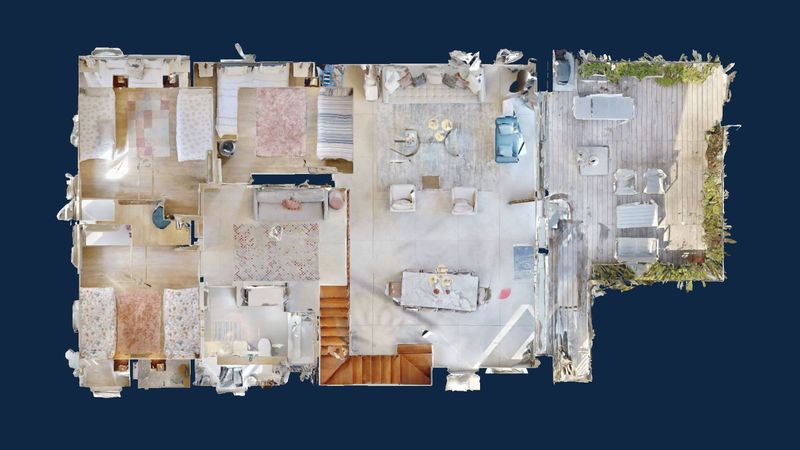
Some fifteen years ago our office was hired to sell a small ground floor apartment in Rehavia. We're not going to name the building. It was just under 70 meters, renovated in a clean modern style, three bedrooms and two bathrooms, with access to a garden that technically belonged to the building and was not registered to the unit. The owner lived there part of the week, spent the rest in Tel Aviv, and rented it out short term when he was away.
The paperwork was in order. The Land Registry (nesach Tabu) described an apartment. The city billed property tax (Arnona) on an apartment. The seller carried a bank mortgage, which meant a bank had already sent an appraiser, taken the property as collateral, and lent against it as an apartment. Nobody had a reason to think it was anything else.
We represented the seller. A cooperating agent brought the buyers, a price was negotiated, and both sides hired lawyers. The buyers did serious due diligence by the standards of the day. Their engineer inspected the property and found a moisture problem, which the seller repaired before signing. Their lawyer reviewed the contract, the registration, and the ownership of the unit. A contract was signed, and the first payment was made.
One document was missing from the whole process: the apartment's status in the building file (tik binyan) at the municipality. At the time it couldn't be located, and with the registry, the tax records, and an existing mortgage all in agreement, nobody treated that gap as a warning sign.
Then the buyers applied for their mortgage, and their bank sent its own appraiser (shamai). A bank appraiser doesn't stop at the registration. His job is to find the building permit (heter bniyah) and see what the authorities actually approved, and he kept looking until the file turned up in an archive in a different city's municipality. Inside it, the unit was a storage room (machsan). A request to convert it into an apartment had been opened many years earlier and, as far as the file showed, never approved.
Banks lend against the legal property, not the renovated one. An appraiser won't assign residential value to space that has no residential permit, and no bank writes a housing loan on a storage room. The buyers had been counting on financing roughly half the price, well within the Bank of Israel's limits (today up to 75% of value for a first home, 70% for upgraders, 50% for investors and foreign buyers). That financing was gone.
The seller was not necessarily hiding anything. As far as anyone could show, he didn't know either. He had bought an apartment, paid taxes on an apartment, and mortgaged an apartment. Under Israeli law that mattered, because second hand sales here run on buyer beware. A seller answers for defects he knowingly concealed. Everything else, including the planning and permit status, is the buyer's to verify. The buyers could not close without the loan, and under the contract that was their problem. They walked away and forfeited a substantial deposit.
They then sued their attorney. There is no title insurance in Israel. The person responsible for verifying a property's registration and classification is the buyer's lawyer, so that is where the claim went. We were not a party to the case and won't say how it ended.
The risk in this story lives in a specific kind of property. In Rehavia, Talbiya, the German Colony, Baka, and Old Katamon, some buildings from the 1930s through the 1960s were built with storage rooms, laundry rooms, and shelters on the ground floor and attics above the top floor. Over the decades many of these spaces were converted to living space. Some conversions were permitted, and some were never approved at all, even while the registration and the tax records caught up with how the space was actually being used. The Tabu records ownership. It does not certify that the use was ever approved. Only the building file answers that question.
That deal changed how we work. Ever since, we pull the building file when we take on a listing, above all for ground floor and attic apartments in older buildings, and we do it before the property goes to market. Jerusalem makes this much easier now than it was then, since licensing files can be ordered and viewed through the municipality's online systems for most properties. Some properties, especially those with registration issues, are harder to obtain.
Most seasoned real estate attorneys learned from cases like this and know to check the building file and permit history, not just the Tabu and the contract. They do this before signing. If you're selling, pull your own file first. Better to find a problem while there's time to fix it or price for it than to hear about it from your buyer's bank. None of this is legal advice. Permit questions turn on the specific file, which is exactly what a real estate lawyer and a licensed appraiser are for.
Gabai Real Estate is a boutique Anglo-Israeli agency serving Anglo and Israeli buyers across Jerusalem, Efrat, Ma'ale Adumim, Ra'anana, Tel Aviv, and communities throughout Israel. For all your real estate needs, contact one of our agents, who will be happy to help.