

"Can I get more information on this property?" The question that can lock you into that agent.
By Yaniv Gabbay, Co-Owner & Broker, Gabai Real Estate
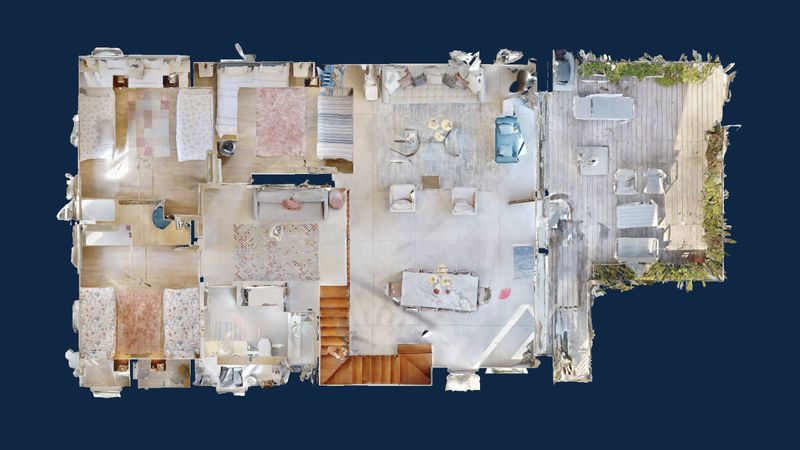
A few weeks ago a buyer I have been working with for months sent me a message. He had seen an apartment on Facebook, called the number on the ad, and spoken to the agent for twenty minutes. He got the street, the floor, the price, and the floor plan. Then he wrote to me: "Can you take me to see this one?"
He is American, and in America that is how you do it. The listing agent works for the seller, your agent works for you, and you bring your own person to the showing.
In Israel, when you contact an agent to get information about a property, you should continue with that agent on that property. It doesn't matter that you have been working with someone else for months. This is not a legal rule. Nothing in the Brokers Law says a buyer who asked an agent for the address must buy through him. It is the ethics of the business as I understand them. The reasoning is simple: the agent found the property, did the work to market it, and answered your call. Taking his work to someone else is not automatically illegal. It is unfair to him.
If you want to stay with your own agent, do not call the number on the ad. Send the ad to your agent and let him make the call. He will find out who is marketing it and whether the listing agent is cooperating with other agents.
Not every agent will agree with me on this, but this is how I see it. Whether the law backs that up is a separate question, and the answer depends on what happened next: whether you signed his form, what information he gave you, and so on.
In Israel, buyers pay commission, and so do renters. The custom is 2% plus VAT from each side on a sale, and one month's rent plus VAT from each side on a rental. The law does not set the number; it says only that whatever fee is agreed must be written on the order form.
In the United States the seller signs a listing agreement for 5% or 6% and the listing agent either splits it with the buyer's agent or represents both sides. The seller sets his price knowing that is coming off the top. The same is true in London, Sydney, and Toronto. Israel simply made the payment visible, so the buyer knows what his agent costs and can hold him to it. Since the 2024 Realtors settlement, American buyers have to sign written agreements stating what their agent is paid, which is Israel's system arriving in America nearly thirty years late.
The Real Estate Brokers Law of 1996 (חוק המתווכים במקרקעין) entitles a broker to a fee when three things are true: he was licensed, the client signed a written order for brokerage services, and he was the effective cause, the גורם היעיל, that brought the parties to a binding agreement.
The Supreme Court said in 2018, in Mizrahi v. Markovitz, that gaps in a signed form can be filled by the court where there is no real doubt about who, which property, and how much. And where there was no form at all, courts have still made buyers and sellers pay when the evidence showed that the agent did the work and the client knew it. The evidence is in ordinary communication, like WhatsApp messages in which the client acknowledges the agent or the fee, recordings of the client promising to sign, phone logs showing the agent arranged the contact, the agent's sign or ad as the only route by which the client could have found the property, and the client's own testimony falling apart on the stand. Judges weigh who introduced whom, in what order, and whether the client then went quiet. In 2024 the Tel Aviv District Court ordered the seller of a NIS 17 million apartment to pay NIS 340,000 with no form, because he was recorded promising to sign and then later refused. A Haifa court awarded NIS 62,000 to a broker with no form because he was plainly the effective cause. And this year, in Kastenbaum v. Yaakobi, the Supreme Court made a lawyer's company pay a NIS 500,000 fee plus interest from 2017 on a property only his client had signed for, because the two were partners and because a lawyer who learns of a property through his client and buys it around the broker raises serious questions of good faith.
In Moskovitz v. Bir the Supreme Court said the question of who caused a deal is a question of causation and common sense. In Patel v. Margalit it said the test is the effectiveness of what the agent did, not the quantity, and that giving a buyer the address can be enough. In Yitzhakov it said that a buyer who takes an agent's information and uses it to go to the other side directly has breached the duty of good faith.
The agent whose work put the property in front of you caused the deal. Not the one who unlocked the door. When you call the agent who marketed an apartment and take the details, you have made him the effective cause of whatever follows with that apartment.
Many properties advertised here are not exclusive listings. The agent on the ad may be one of five marketing the same apartment, with no protection from the seller. He found the property, photographed it, and paid to promote it, and his only protection is the buyer who called him. When that buyer takes the details and goes to another agent who also has access, the first agent has been cut out completely. He cannot go to the seller. He can only collect from the buyer.
In Holon, a buyer signed an agent's form, got the seller's son's phone number, told the son he "got the number," and had his wife sign the purchase. The agent never set foot in the apartment with him. In 2025 the court ordered him to pay double the fee, NIS 100,000 plus VAT, and in February 2026 the District Court affirmed, calling a deliberate attempt to avoid paying a broker a breach of good faith.
In Ashdod, a buyer was shown an apartment three times by his agent, went quiet, signed with the seller's agent and bought through him. In June 2026 he paid the first agent her NIS 70,200 fee plus an equal penalty plus costs. He argued it was unreasonable to pay two agents. The judge said he had slammed the door on the agent right after walking through it thanks to her.
In Netivot, a buyer viewed once, said it was not for him, and bought four and a half months later. NIS 75,000. The court wrote that a buyer who blocks an agent from being the effective cause cannot then avoid the fee.
In Jerusalem, a buyer called the number on a sign on HaNetiva Street, signed, let the agent negotiate the price down, then said he was no longer interested and bought during the exclusivity. NIS 126,000 plus VAT and costs, and in April 2025 the District Court dismissed his appeal without asking the agent to respond.
In Tel Aviv, a daughter signed for her parents on half a floor of a tower on Arlozorov Street; the parents bought the whole floor for NIS 84 million through someone else. NIS 982,800.
In Kfar Saba, sellers signed with their neighbor four days after exclusivity ended. The court found the deal had been woven during the exclusivity and awarded the fee, NIS 47,000 in agreed compensation, and NIS 25,000 in costs.
There are rulings that went the other way. Agents have lost when they showed a property once and did nothing more while another agent negotiated a materially lower price, when they never had the client sign anything and could not prove he knew he owed a fee, when their license had lapsed, or when they drafted the memorandum of sale themselves, which the law forbids. Those cases are about agents who did not do the work or did not do it properly. In the cases above, the agent did the work and the buyer used it, and in none of them was the amount the 2%. It was the 2% plus an equal penalty, plus interest, plus both sides' legal fees, plus a published judgment with the buyer's name on it. Take a typical case: a buyer who would have paid NIS 60,000 by honoring his agent ends up paying NIS 150,000 and spending two years in court.
The American system is built on representation. Every agent works for someone, and that is written down. Two agents fighting over the same buyer is a dispute between the brokers at the Realtors association; the buyer is not in the room. That works because of the multiple listing service: every property is in one shared database, every agent can show it, and the seller's fee is shared with whoever brings the buyer.
Israel has no real MLS. There is Shiran, a listing network in Jerusalem and a few other cities, but it is a tool for agents to share inventory among themselves, not as much a public database that every buyer and every agent in the country can see. The properties your agent knows about and the properties mine knows about are not the same list. Information is the asset, and most of an agent's work is finding properties and putting them in front of buyers. The law recognizes that by making the effective cause, not representation, the basis for payment. The American buyer who does here what he would do at home is not being dishonest by his own lights. He is applying the ethics of a system that does not exist here, and the agent he called experiences it as getting taken advantage of.
Choose your agent before you start calling numbers, and tell him he is your agent.
When you see an ad, send it to him. Do not call the number. If the property is exclusive to another office, the two offices will usually cooperate and split the fee.
If you did call the number, continue with that agent on that property. You owe him nothing on other properties, and your own agent handles everything else.
Sign the order form, and read it. Ask for it in English. Look for the clause about family members and people acting on your behalf and the agreed compensation clause; both are enforced.
If you saw a property through an agent and decide against it, tell him. If you change your mind later, call him back. Buying it quietly months later, or through your spouse, ends in court.
For renters, all of this applies, at one month's rent plus VAT. For sellers who sign exclusivity: every buyer who approaches you during the period goes to your agent, including the neighbor and the cousin, and the courts have enforced that for months after the period ends.
The buyer I mentioned at the start went to see that apartment with the agent he had called, and he was right to. He is still my client on everything else.
Yaniv Gabbay is Co-Owner and Broker at Gabai Real Estate, a boutique Anglo-Israeli agency serving Anglo and Israeli buyers across Jerusalem, Efrat, Ma'ale Adumim, Ra'anana, Tel Aviv, and communities throughout Israel. To have Yaniv look at an order form before you sign it, or to choose your agent before you start calling numbers, reach out at yaniv@gabairealestate.com or +972-52-614-1442.
General information only, not personalized legal advice. Several of the 2025 and 2026 rulings described above are known from press and law-firm reports rather than the published judgments. For a specific dispute, consult a lawyer who handles brokerage matters.
Sources: Real Estate Brokers Law 1996 · Ethics and Professional Duties Regulations 2024 · Ministry of Justice broker-exam material (Moskovitz, Yitzhakov) · Mizrahi v. Markovitz · Sagi v. Dar'i · Kastenbaum v. Yaakobi · Holon double fee, Globes · Ashdod, Bizportal · Netivot, Globes · HaNetiva 32, ICE · Arlozorov, Bizportal · Kfar Saba, Globes · NAR Code of Ethics, Article 16