

Full Disclosure: What 3D Scans Do to Israel's Culture of "Just Come and See It"
By Yaniv Gabbay and Abe Truitt, Gabai Real Estate
When I started in real estate seventeen years ago, photographs were scarce. A listing carried a line or two of specifications, maybe one exterior shot, and then the agent said the thing every agent said: just come and see the property.
That was not laziness. It was strategy. The prevailing view was that information was leverage, and that the less a buyer knew, the more likely they were to walk through the door. Show too much and the buyer disqualifies the property from their kitchen table in Golders Green, over a detail that would have meant nothing once they were standing in the salon. Agents ran listings like intelligence operations, releasing the minimum necessary to get a body into the apartment.
So when we started producing video, it went against the grain of the entire industry. Colleagues told us we were giving the store away.
Seventeen years later I am hearing the same sentence about 3D scans, often from respected colleagues. It is worth taking the objection seriously because, in the war between photographs and video, photographs won.
They are now non-negotiable, and buyers rank them above everything else. In the National Association of Realtors' 2025 Profile of Home Buyers and Sellers, covering transactions from July 2024 to June 2025, buyers rated photographs "very useful" at 81 percent, ahead of detailed property information at 77 percent and floor plans at 57 percent.
Video did not win. It has been available, cheap, and well understood for well over a decade, and it never became standard. In NAR's 2025 Technology Survey, published September 18, 2025, drone photography and video was used by 52 percent of REALTORS, alongside e-signature at 79 percent and social media at 75 percent. After fifteen years, video sits at roughly half the industry.
So the question about virtual tours is not whether they help bring a buyer to the property. It is which of those two paths they are on.
In the same NAR survey of buyers, photographs scored 81 percent and virtual tours came in at 38 percent. That is the profile of a tool a substantial minority value a great deal and the majority can take or leave, which is similar to video.
A video is authored. Someone chose the order of the rooms, the pace, the music, the hour of day, what to linger on and what to skip. A good listing video is a piece of persuasion, and all persuasion is a selection. You could put out a video and still hold plenty back.
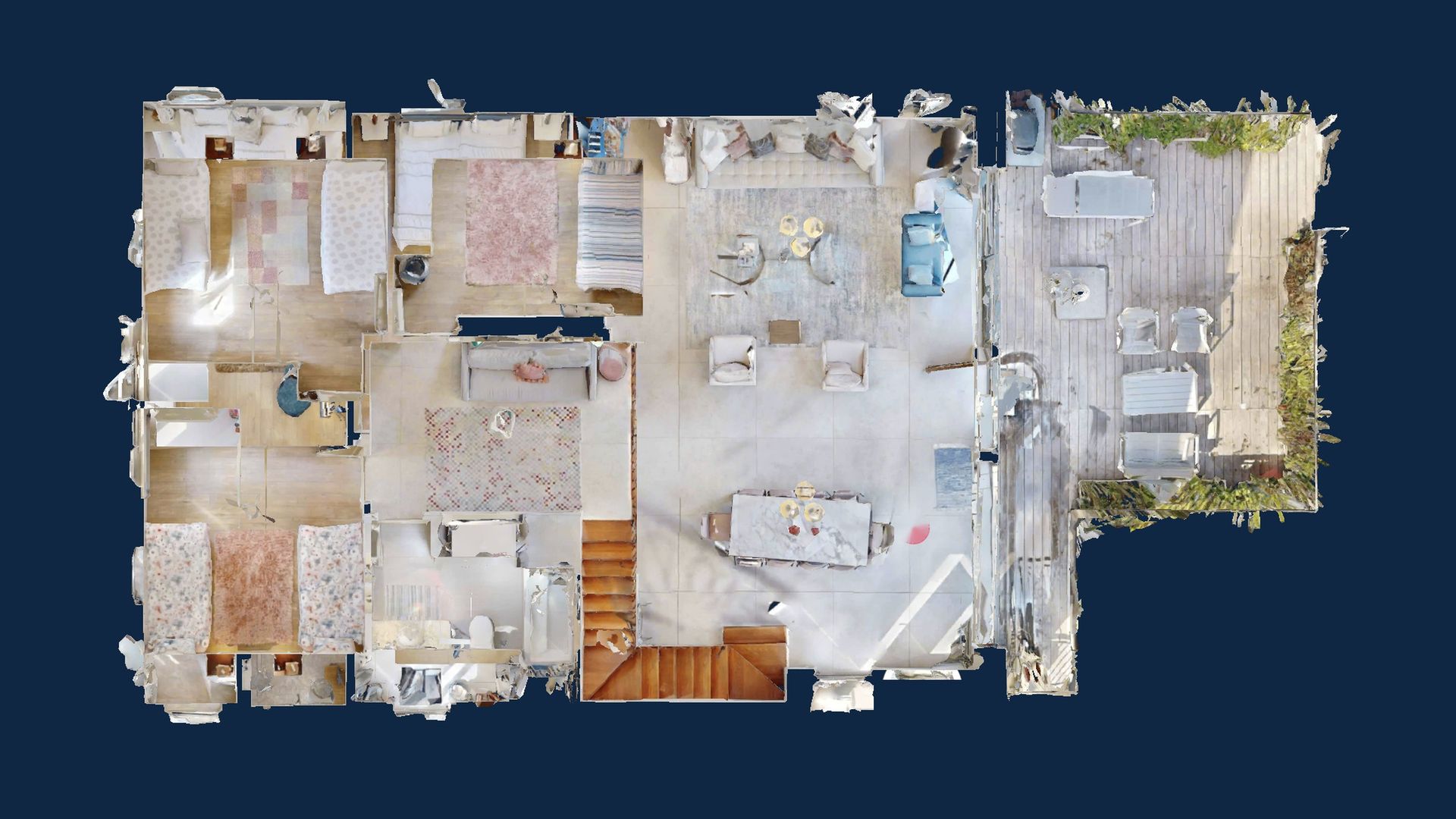
A scan is not authored. Nobody chose the route, because the buyer chooses it. The buyer goes where they want, stays as long as they want, and sees the parts no one would have filmed. A scan is not a story about the apartment. It is the apartment, as a record.
Which means there is something to those agents' objections. The "too much information" concern was arguable against video. Against a scan it is simply accurate. If the layout is compromised, the scan shows it. If the third bedroom is a corridor with a door, the scan shows that too.
So let us concede the point properly: a scan will cost you some showings. And there are properties where we think the objectors are right. A home whose weakness is its layout and whose strength is its light, its view, its quiet street, or simply its feeling shows dramatically better in person than in a model. Scanning it can lose you the buyer. The decision to scan should be made property by property rather than by policy.
Set against that, here is the clear advantage of a scan.
Some homes photograph badly and live beautifully, usually because the rooms connect in a way a still cannot convey. A scan rescues those properties. You see how the kitchen opens to the salon, where the light comes from, how the space actually flows. The apartment that looks chopped up in eight photographs reads as generous in three dimensions.
A scan is also a measurable model, wall to wall, doorway width, ceiling height. An architect can sketch from it and a contractor can price from it without another site visit. For a buyer abroad that is the difference between a renovation quote in three weeks and one in three months.
It also settles arguments. We recently sold a Jerusalem apartment where the buyer's lawyer had seized on a possible building infraction, an enclosed porch, and was making a considerable issue of it. His office is in Tel Aviv, nowhere near the property, so coming to visit was not going to happen. We sent him the scan. He walked the porch himself and saw how small it was and how little it bore on the property, and the deal closed.
And then there is the pattern in our own files that surprised us most. The person who opens a property's tour most often is almost never the buyer still deciding. It is the buyer who has already committed. Once a price is agreed, that tour gets opened again and again: measuring the salon for the sofa, showing the parents in Manchester, walking a contractor through the kitchen, checking whether the mamad door swings into the space they wanted for a wardrobe. Sixteen studies found that people seek out information supporting a decision once it is made. The gap between agreement and closing in Israel runs for months, and for an overseas buyer it is spent thousands of miles from the asset. A tool that lets someone re-walk the apartment at midnight in Teaneck and be reminded why they chose it is worth having.
There is also the simple fact that habits change: people who now listen to books rather than read them, and text rather than call, are increasingly at ease walking an apartment on a screen before they walk it in person.
Buying sight unseen does happen, less often than the marketing implies. The high figures everyone quotes come from the pandemic and measured market conditions rather than technology.
So a scan is not the new photograph and it is not the new video. It is closer to a floor plan: a reference document rather than a marketing asset, which is why it gets opened most after the decision rather than before it. The buyer who walks away because of what they saw in a scan was going to walk away in the stairwell. Now they do it before anyone books a flight.
We would love to hear from you. Do you find scans helpful when you're deciding on a property? Abe runs our 3D scanning and also scans properties for owners and agents outside our own portfolio, so if you'd like one done, he's your man.
General market information only, not personalized financial, legal, or tax advice.
Yaniv Gabbay is co-owner and broker at Gabai Real Estate. Abe Truitt is a real estate advisor at the firm and runs its 3D scanning. Gabai Real Estate is a boutique Anglo-Israeli agency serving Anglo and Israeli buyers across Jerusalem, Efrat, Ma'ale Adumim, Ra'anana, Tel Aviv, and communities throughout Israel. For all your real estate needs, contact one of our agents, who will be happy to help.